HUTCHMED is an innovative, commercial-stage biopharmaceutical company committed to the discovery and global development of targeted therapies and immunotherapies for the treatment of cancer and immunological diseases.
We are among the first global-focused novel drug discovery companies in China. Over the past two decades, we have established a fully integrated R&D platform with world-class discovery and development capabilities. Since inception, we have focused on bringing cancer drug candidates from in-house discovery to patients around the world, with our first three medicines marketed in China, the first of which is also approved around the world including in the US, Europe and Japan.
We have also developed a profitable commercial platform with deep pan-China market access, which manufactures, markets and distributes our novel oncology products, as well as prescription drugs and consumer health products in China.
HUTCHMED is listed on the Nasdaq Global Select Market, the Stock Exchange of Hong Kong Limited and the London Stock Exchange’s AIM market (Nasdaq/AIM:HCM; HKEX:13).
MISSION
To discover, develop and bring innovative medicines to patients worldwide
VISION
To be a leading innovative biopharmaceutical company to improve lives globally, driven by medical need
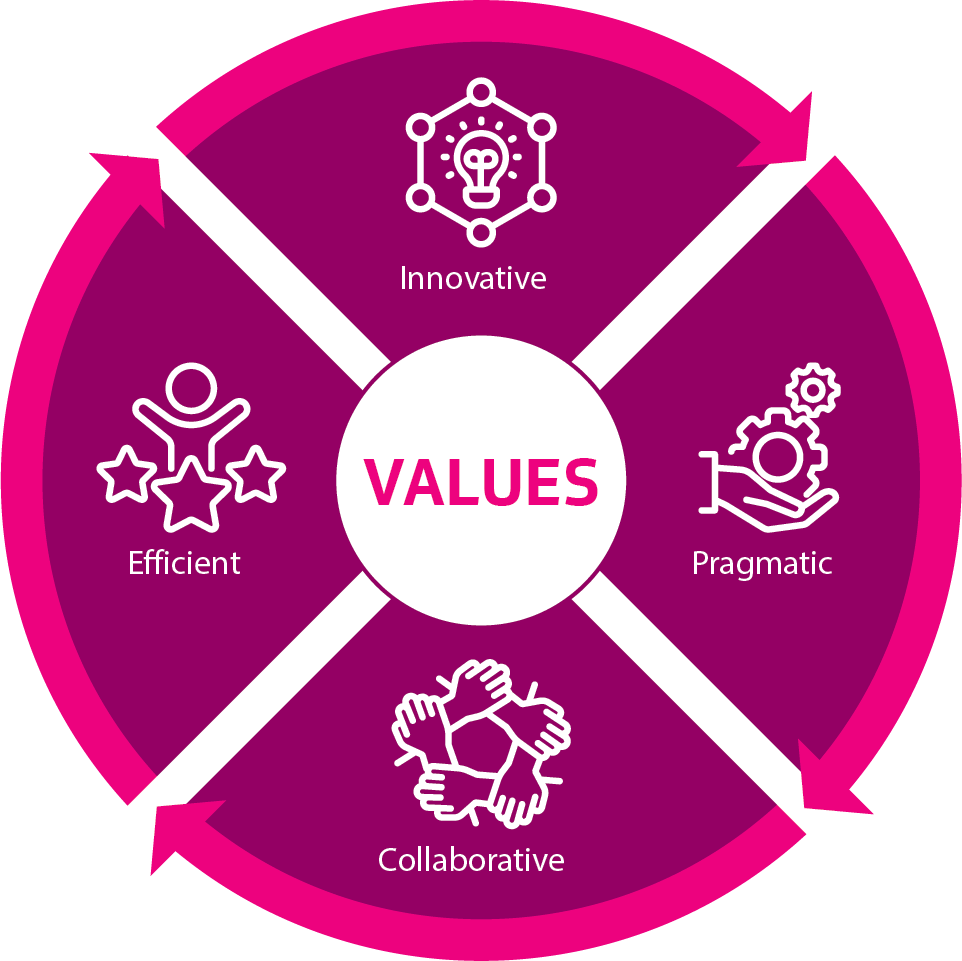
With innovation at the core of everything we do, we discover and develop novel, differentiated medicines to address unmet medical needs.
We are driven by science to provide effective, safe, advanced new treatments at world-class standards for patients in need around the world.
PRAGMATIC
While striving to develop the best outcomes for our patients, we maintain the highest ethical and professional standards of truthfulness, integrity and accountability. We conduct our business responsibly, in full compliance with all regulations.
We are committed to continue to grow our business in a sustainable and conscious manner, managing everything we do rationally, with reason and sense. This will lead us to realize the full potential of our products, brands and business.
COLLABORATIVE
Guided by our corporate strategy, we encourage cross-functional collaboration and communication to foster a culture of trust and support, where each member of our team is empowered to take ownership of their work and support one another to achieve our collective goals.
To drive greater value to unmet medical needs, we leverage the rapid advances of the industry by forming broad and deep collaborations with mutual benefits.
EFFICIENT
We are committed to our responsibilities and promises as we strive for greater effectiveness and accountability.
We make conscious decisions on how we use our resources as we grow a productive and top-notch drug discovery, development and commercialization that shapes our sustainable organization.
2000
FOUNDED
HCM
NASDAQ &
LONDON AIM
13
HKEX
>20
NOVEL DRUG CANDIDATES
CREATED BY IN-HOUSE
DISCOVERY ENGINE
4
APPROVED & MARKETED
PRODUCTS IN CHINA
1
APPROVED & MARKETED
PRODUCT IN THE US, EU & JAPAN
~40
CLINICAL TRIALS WORLDWIDE
INCLUDING 13+ REGISTRATION STUDIES